


Africa Strengthens Foundations to Lead Its Own Financing as Domestic Pools Surpass External Flows, AFC Report Shows
- Africa’s development challenge is increasingly shifting from capital raising to productive capital deployment in infrastructure and industry, according to AFC's State of Africa’s Infrastructure Report 2026
- Non-bank domestic capital pools now exceed US$2 trillion, surpassing ~US$1.7 trillion in cumulative external flows to Africa (2014–2024)
- Official development assistance fell from US$83.8 billion in 2020 to US$73.5 billion in 2023, with further declines expected for 2025–2026
- Sovereign issuance dropped from over US$29 billion in 2018 to US$4–6 billion annually in 2022–2023, with only limited recovery through 2024–2025
- Domestic pension and insurance assets crossed US$1 trillion for first time
- Central bank reserves at US$530 billion in 2025, from US$480 billion in 2024
- Gold now represents ~17% of reserves, up from less than 10% in 2022–2023
- Africa’s biggest infrastructure opportunity lies in integrated systems—connecting energy, transport, industry and digital layers into demand‑anchored ecosystems that improve bankability and enable scale
Nairobi, Kenya, 23 April 2026 — Africa’s domestic capital base has reached a scale that now exceeds external financing flows over the past decade, marking a turning point in how the continent funds its growth and industrialisation, according to the Africa Finance Corporation’s State of Africa’s Infrastructure Report 2026.
SAIR 2026 finds that cumulative external flows to Africa totalled approximately US$1.7 trillion between 2014 and 2024, while Africa’s non-bank domestic capital pools exceed US$2 trillion. The implication is clear: African capital now has a stronger foundation to play a significantly larger role in financing the continent’s development.
Launched at The Africa We Build Summit in Nairobi, co-hosted by AFC and H.E. Dr William Samoei Ruto, President of the Republic of Kenya, the SAIR 2026 report argues that the overarching development priority has shifted from capital mobilisation to intermediation—converting savings into infrastructure, industry, and productive investment at scale.
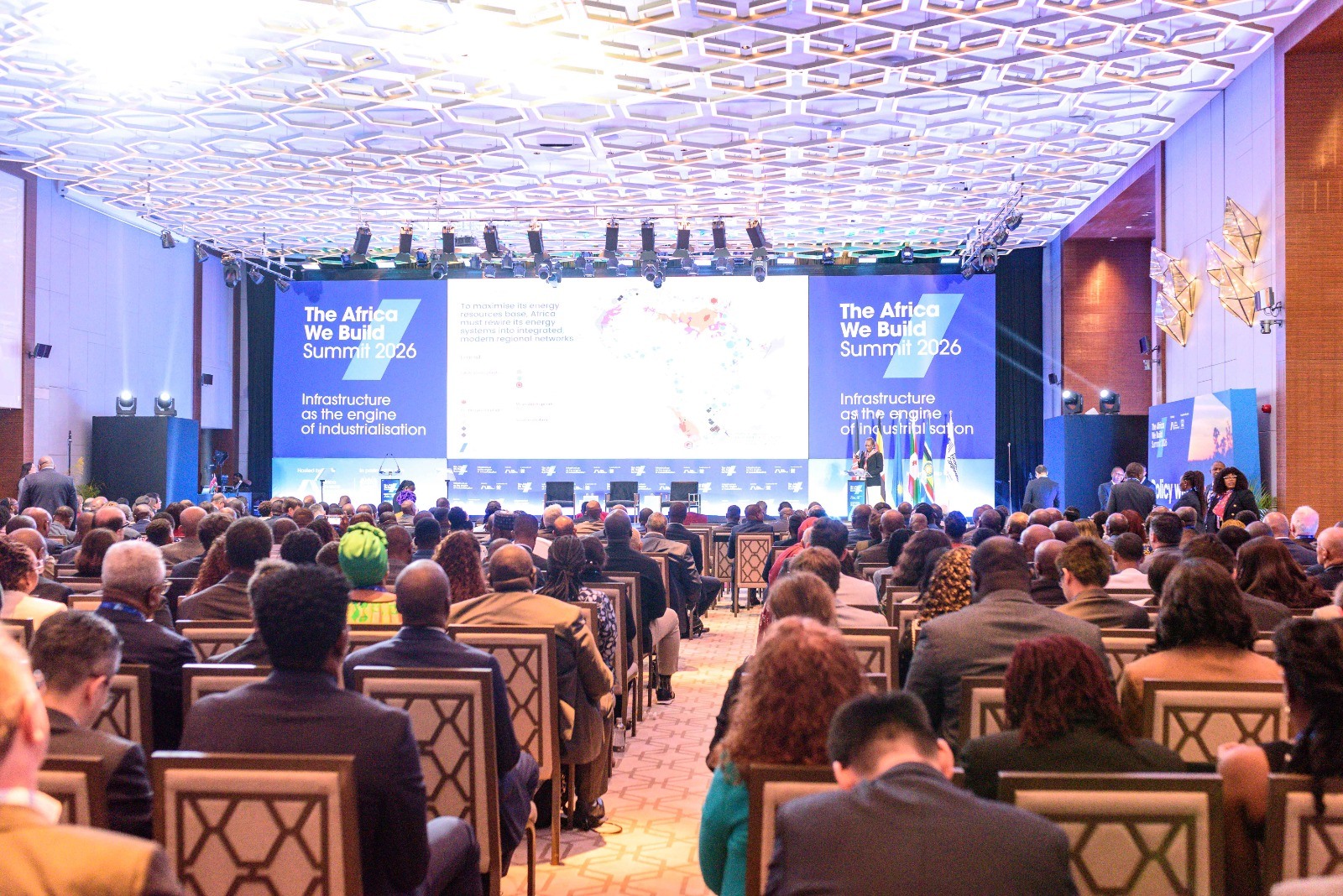
“The constraint is no longer capital—it is intermediation," Samaila Zubairu, President & CEO of AFC, said at the The Africa We Build Summit today. "We have the savings, but not yet the systems to channel them into infrastructure and industry at scale. Closing that gap is now Africa’s most important economic task. The next phase of Africa’s infrastructure story must move beyond standalone assets towards integrated systems."
Local Capital on the Rise
Driving the increase in domestic institutional capital, pension and insurance assets have surpassed US$1 trillion for the first time. Public development bank assets stand at US$276 billion, and sovereign wealth funds at US$164 billion, while central bank reserves increased from US$480 billion in 2024 to US$530 billion in 2025.
This increase has been supported in part by stronger commodity dynamics and rising gold accumulation. Gold now represents approximately 17% of Africa’s total reserves, up from less than 10% in 2022–2023, while physical holdings rose from 663 tonnes in 2022 to an estimated 738 tonnes in 2025.
Despite its increased scale, domestic capital remains largely concentrated in short-term, low-risk assets—particularly government securities—reflecting limited investable pipelines, regulatory incentives favouring liquidity, and insufficient risk-sharing mechanisms. The result is a persistent gap between available savings and long-term productive investment.
External Financing Recedes
At the same time, external financing is becoming less reliable, reinforcing the case for a domestic capital-led development model. Official development assistance to Africa fell from US$83.8 billion in 2020 to US$73.5 billion in 2023 and is projected to decline further. The OECD estimates global official development assistance fell 23.1% in 2025, the largest annual contraction on record.
Sovereign issuance remains well below pre-2019 levels, falling from over US$29 billion in 2018 to US$4–6 billion annually in 2022–2023, while foreign direct investment has remained concentrated at roughly US$45–55 billion annually, insufficient to meet the continent’s broad investment needs.
As a result, external capital is increasingly complementary, rather than foundational, to Africa’s development model.
From Assets to Integrated Systems
The biggest potential for capital deployment lies in demand-driven integrated infrastructure, according to SAIR 2026. In transport and logistics, corridors deliver the greatest value when designed as production ecosystems rather than transit routes—linking ports, rail, roads, logistics, storage, and trade facilitation to industrial demand. A continental backbone is already taking shape; the opportunity now is to improve performance, execution, and coordination.
This is particularly evident in East Africa. Mombasa—one of Africa’s busiest ports—handles more than 45 million tonnes of cargo annually, while rail investments are extending connectivity inland, including along the Naivasha–Kisumu corridor. In aviation, SAIR 2026 identifies air transport as the most immediate and scalable lever for integration. Across Kenya, Rwanda, and Ethiopia, aviation contributes a combined US$5.5 billion to GDP and supports around one million jobs, demonstrating how connectivity can rapidly translate into trade and growth.
Similarly, in energy, the priority is no longer incremental capacity additions alone, but integrated systems combining generation, transmission, storage, fuels, and industrial demand. Cross-border infrastructure such as the Ethiopia–Kenya interconnector shows how regional systems can move power to where it is needed most and improve system-wide efficiency.
Resilience Gap
Recent shocks—from Russia–Ukraine to the 2026 Gulf crisis—underscore the cost of fragmented systems and the urgency of building domestic processing, storage, and supply-chain resilience. The continent continues to import over 70% of its refined fuel and faces an estimated US$230 billion annual import bill across essential goods—including fuel, food, plastics, steel, and fertiliser, according to SAIR 2026.
In digital infrastructure, while connectivity has expanded rapidly, the next opportunity lies in building the “missing middle”—terrestrial backbone networks, metro fibre, data centres, Internet Exchange Points, and enterprise platforms that convert connectivity into productivity, services exports, and job creation.
Across all sectors and African countries, the report’s conclusion is consistent: the development challenge is increasingly institutional and systemic. Capital exists, and infrastructure assets are expanding. The next breakthrough will come from linking finance, energy, transport, industry, and digital systems into coherent ecosystems capable of supporting growth at scale.
“Africa is not capital-poor—it is capital-rich but system-poor,” said Zubairu. “The priority must be to build the institutions, instruments, and project pipelines required to deploy that capital into infrastructure and industry at scale.”
Read the full report here: https://www.africafc.org/our-i...
About AFC
AFC was established in 2007 to be the catalyst for pragmatic infrastructure and industrial investments across Africa. AFC’s approach combines specialist industry expertise with a focus on financial and technical advisory, project structuring, project development, and risk capital to address Africa’s infrastructure development needs and drive sustainable economic growth.
Eighteen years on, AFC has developed a track record as the partner of choice in Africa for investing and delivering on instrumental, high-quality infrastructure assets that provide essential services in the core infrastructure sectors of energy, natural resources, heavy industry, transport, and telecommunications. AFC has 48 member countries and has invested over US$19 billion in 36 African countries since its inception. www.africafc.org
Media Enquiries:
Yewande Thorpe
Communications
Africa Finance Corporation
Mobile: +234 1 279 9654
Email: yewande.thorpe@africafc.org